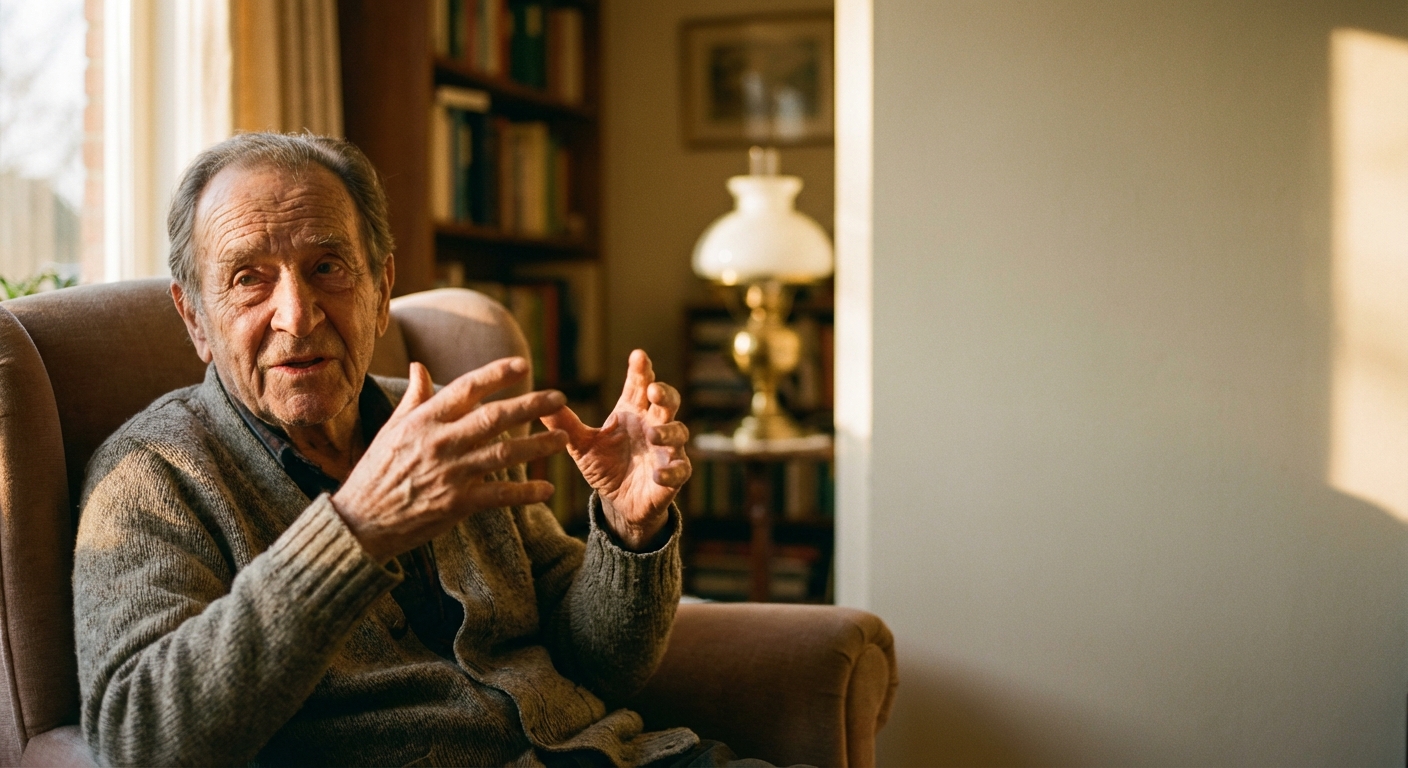
Stories Vanish
Most life stories are never written down. When someone from an older generation passes, the details, the feelings, the lessons go with them.
Get Started
Free for 30 days. No credit card.
Stories worth saving.
Waterfall is for anyone who has lived enough to have stories worth telling, the Silent Generation, Baby Boomers, Gen X, a lifetime of experience. We would be honored to hear your stories, keep them safe, and help you share them with your family and the generations to come. Younger voices have wisdom to add, too.
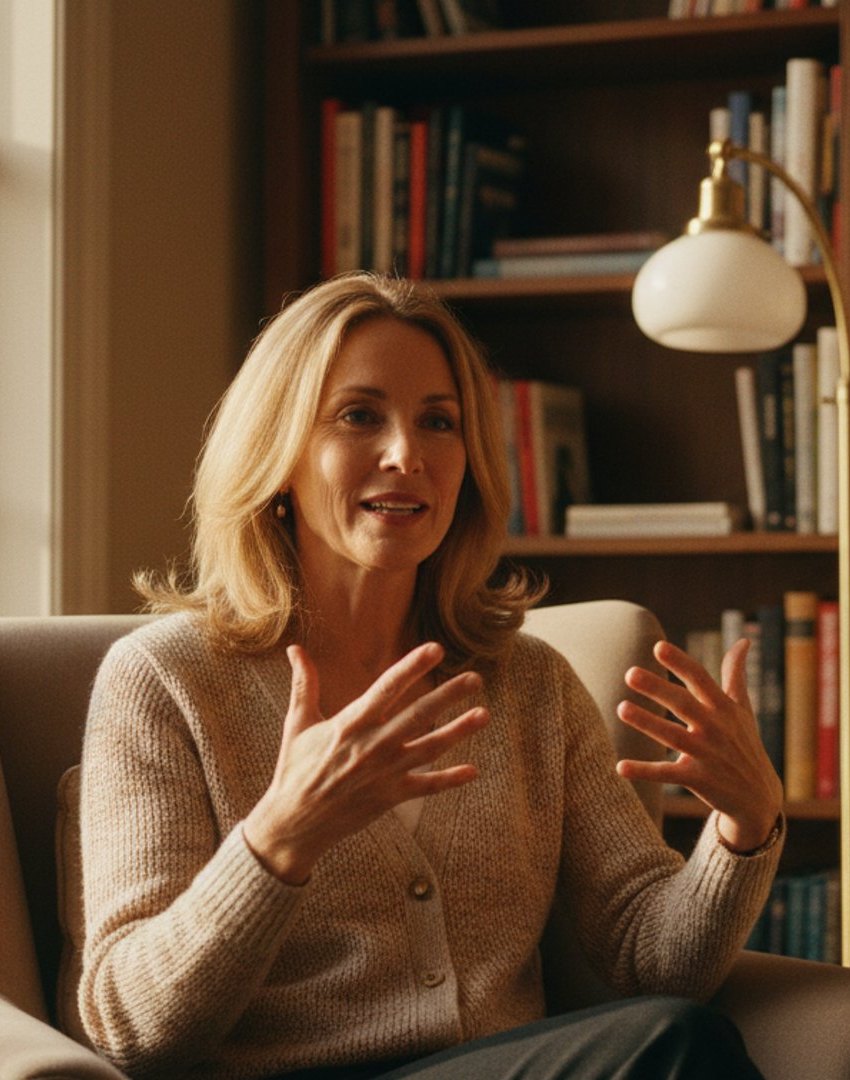
Every life holds stories worth saving.
THE URGENCY
About 10,000 people from the older generations pass away every day in the US alone. Each one carries decades of stories, relationships, and hard-won lessons that have never been written down anywhere.
Most life stories are never written down. When someone from an older generation passes, the details, the feelings, the lessons go with them.
Children and grandchildren almost always say the same thing: “I wish I'd asked more questions while there was still time.”
Too many people who have lived remarkable lives feel unheard and invisible. Sharing their story gives them a voice, an audience, and renewed purpose.
Rare trades, factory techniques, hands-on craft. Knowledge passed through apprenticeship for centuries is disappearing because nobody thought to record it.
Who this is for
A warm companion that listens, asks the right next question, and keeps every story safe, for your family, and for the next generation.
Start telling storiesReminiscence-grade infrastructure for memory care, palliative units, and senior-living communities. Encrypted storage, role-based access, and printable senior login codes.
Schedule a demoHOW IT WORKS
At home, in your senior living community, or at bedside. No typing, no setup, just you, a comfortable chair, and a microphone.
A warm AI guide (or a trained facilitator) asks you thoughtful questions. You answer in your own words, with as much or as little detail as you want.
We capture, transcribe, and safely preserve every story, so your words live on for your family and future generations.
Keep it private, share it with family, or contribute it to help others. You control how your stories are used, and you can change your mind anytime.
Inside the product
One calm home for the storyteller. One clear dashboard for the people who care for them.
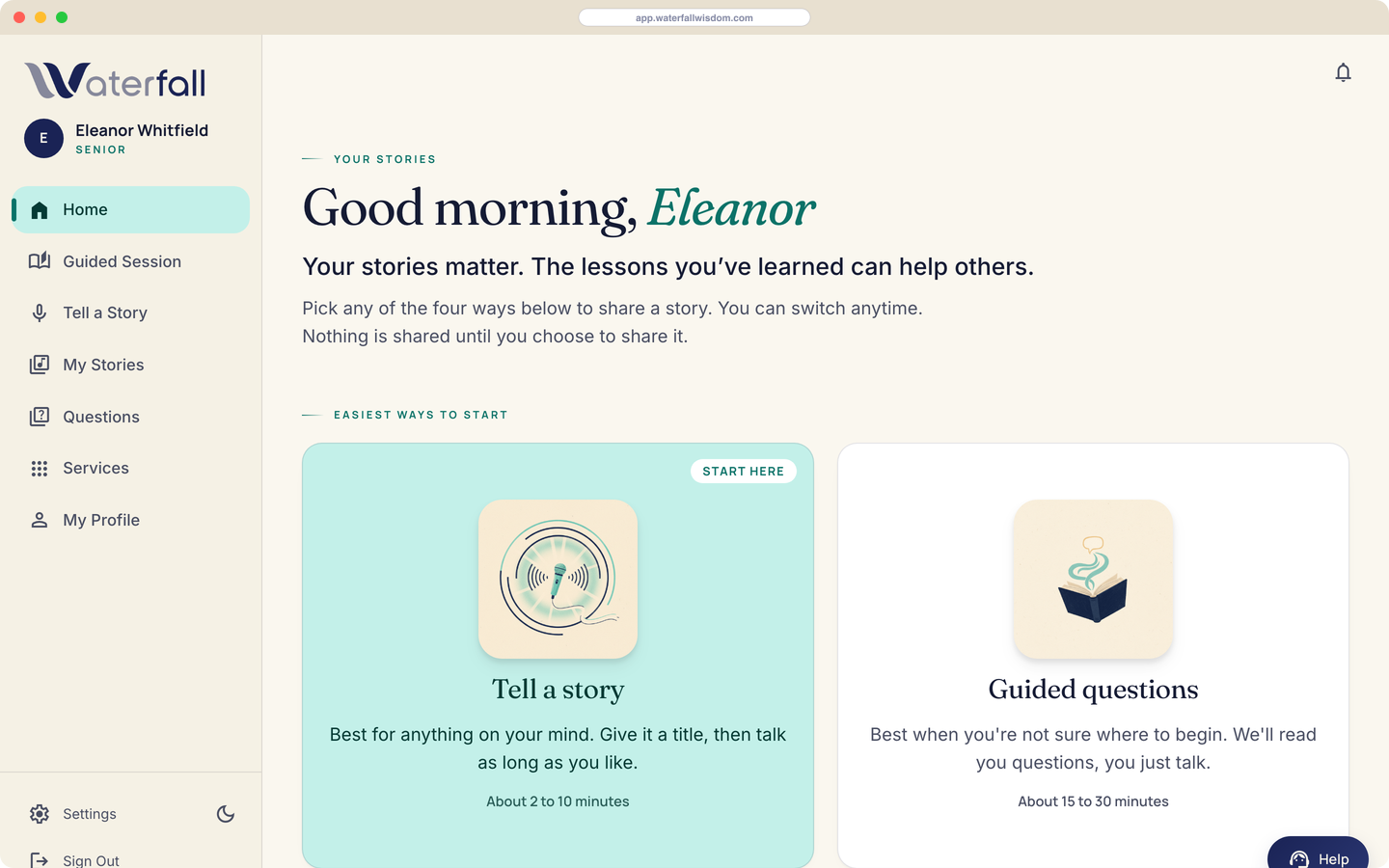
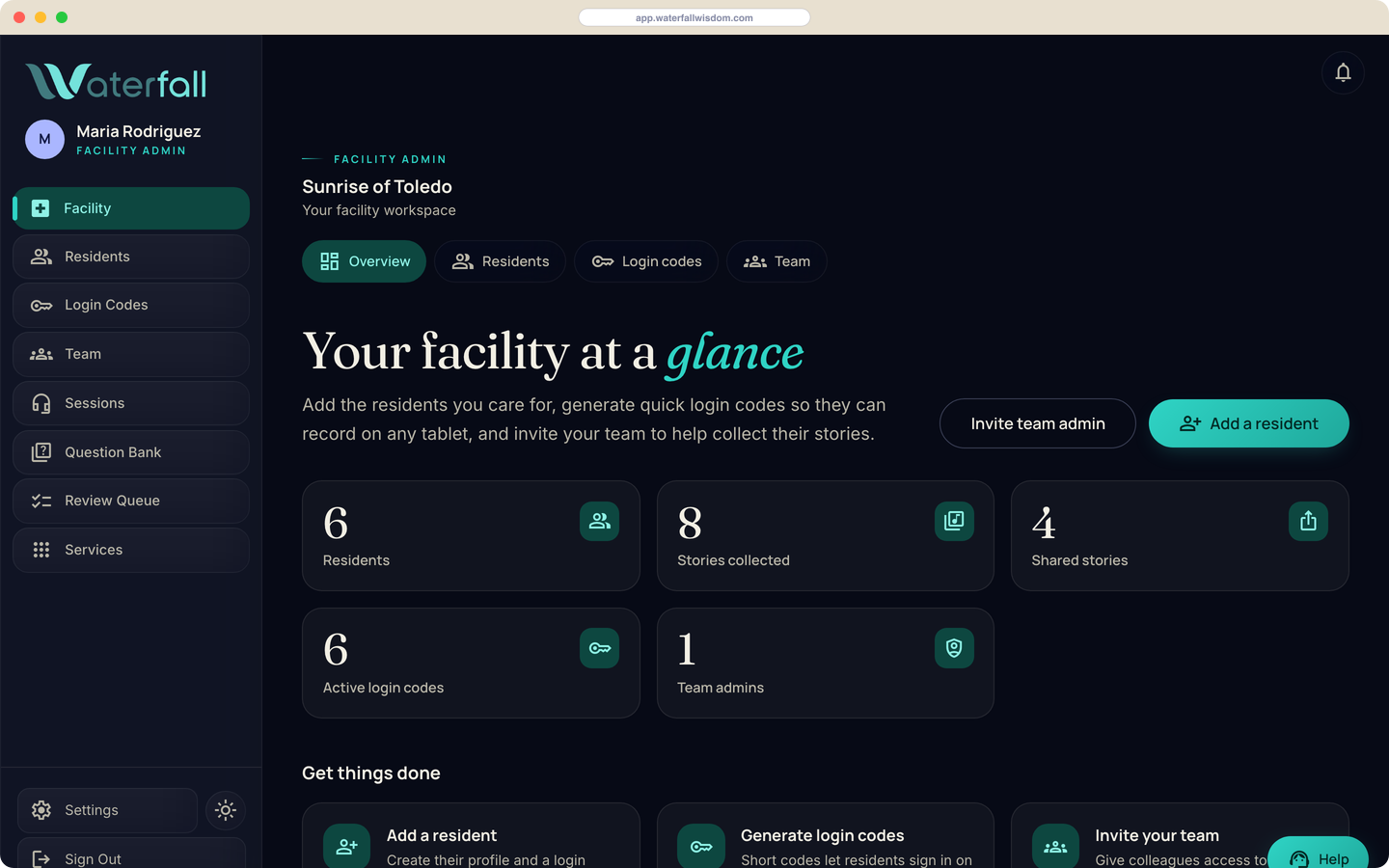
Free for 30 days. Your first story takes about 15 minutes.
Why this matters
Every life is a library.
We make sure it never burns down.
Books hold ideas. But the feel of a life fully lived, the judgment, the warmth, the hard earned lessons, lives only in the telling. We capture it with consent, in the storyteller’s own voice, and keep it safe for the people who will need it most.
If you have lived a long life full of experience, or you love someone who has. There is a story waiting to be told. Share yours, help a parent or grandparent share theirs, or bring Waterfall to the community where you work.
Free for 30 days. No credit card. Cancel anytime.